


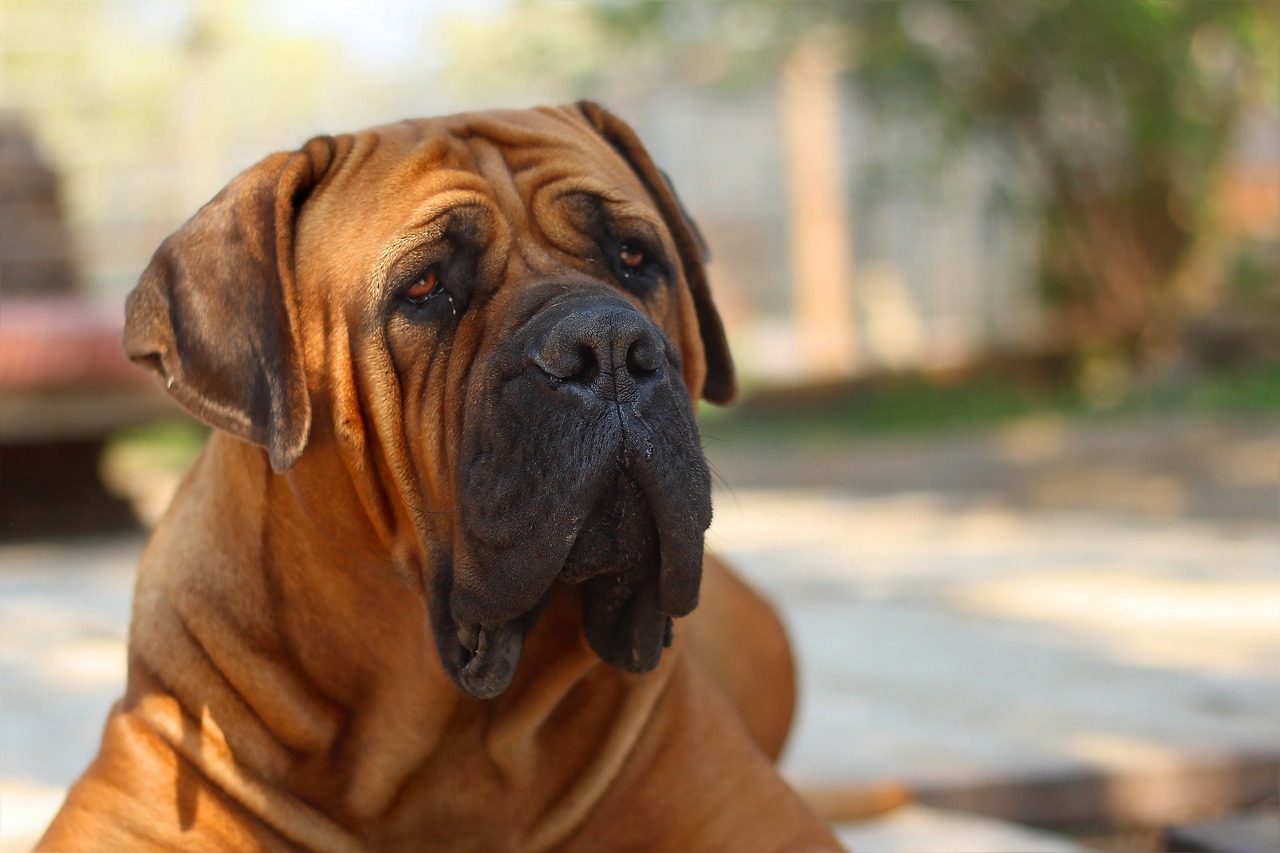
Mastiff breeds are renowned for their imposing size, strength, and unwavering loyalty. These gentle giants are often large and protective, making them excellent guard dogs. However, they also have a soft side and can be affectionate and loving companions.
Earlier, mastiff breeds were used for various purposes, including guarding livestock, protecting property, and even participating in wars. Today, Mastiff breeds are primarily known for being loving family pets and devoted guardians.
While their size and powerful presence can be intimidating, Mastiffs are generally known for their calm and gentle demeanor. They are often good with children and other pets when properly socialized. However, it’s important to remember that every dog is an individual, and early training and socialization are crucial to ensure a well-behaved and happy companion.
How Many Mastiff Breeds Are There?
The exact number of Mastiff breeds varies depending on the source, but it is generally thought that there are around 14 recognized breeds.
8 Popular Mastiff Breeds
There are several different types of Mastiff breeds, each with unique characteristics and origins. Some of the most popular include:
1. French Mastiff (Dogue de Bordeaux)

The French Mastiff, or Dogue de Bordeaux, is a powerful and muscular breed with a distinctive wrinkled face and a short, brindle coat. With ancient roots in France, possibly tracing back to the Roman Empire, they were used for various tasks like guarding, hunting large game, and even fighting. Their powerful build and protective nature made them formidable guardians. Today, they’re known for their loyalty and affectionate nature, often described as “heart dogs” due to their close bond with their families.
Breed Characteristics:
- Origin: France
- Height: 23-27 inches (male), 23-26 inches (female)
- Weight: 110-150 pounds (male), 99-110 pounds (female)
- Temperament: Affectionate, protective, loyal, but can be stubborn
- Life Span: 5-8 years
- Care Requirements: Moderate exercise, regular grooming, and attention to potential health issues like bloat and hip dysplasia
2. Bullmastiff

The Bullmastiff is a large and imposing breed that was originally developed in England to guard estates and protect against poachers. They were specifically bred by gamekeepers in the 19th century, combining the strength of the English Mastiff with the tenacity of the Bulldog. Their imposing presence and protective instincts made them formidable guardians.
Today, Bullmastiffs are known for their intelligence, loyalty, and courage, making them excellent guard dogs and devoted family companions.
Breed Characteristics:
- Origin: England
- Height: 25-27 inches (male), 24-26 inches (female)
- Weight: 100-130 pounds (male), 90-110 pounds (female)
- Temperament: Intelligent, loyal, protective
- Life Span: 7-9 years
- Care Requirements: Moderate exercise, minimal grooming, and attention to potential health issues like bloat, cancer, and joint problems
3. Tibetan Mastiff
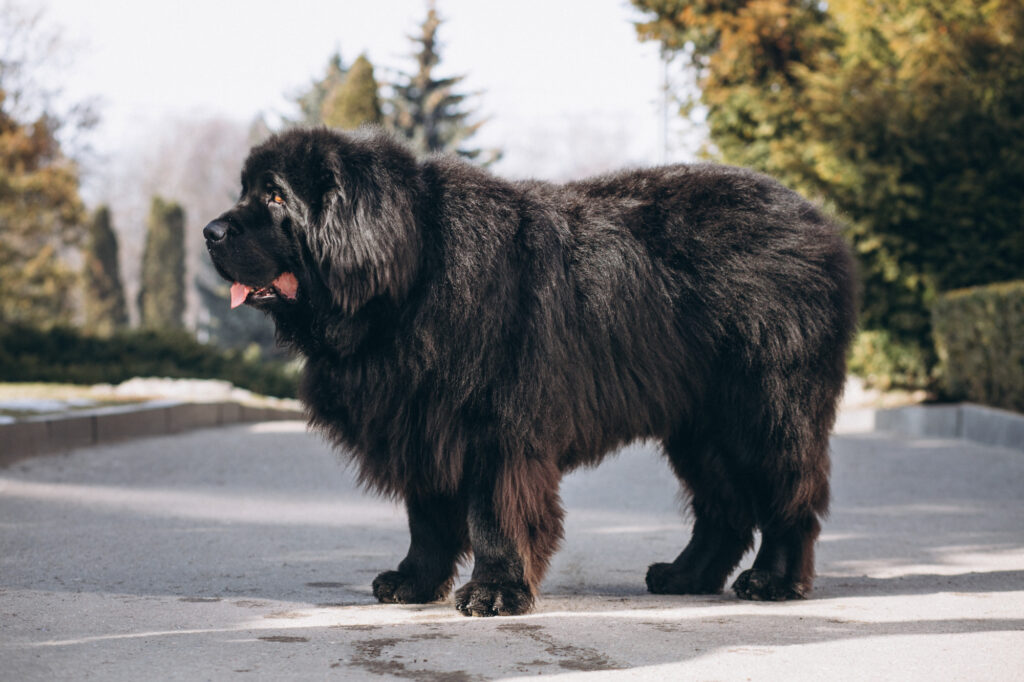
The Tibetan Mastiff is an ancient breed that has been used for centuries to guard livestock and property in the Himalayas. Their origins are shrouded in mystery, with some believing they descend from ancient war dogs. Their thick double coat and imposing size made them well-suited for the harsh climate and challenging terrain of the Tibetan Plateau. Today, Tibetan Mastiffs are known for their independent nature, protective instincts, and imposing presence. They are often aloof with strangers but deeply devoted to their families.
Breed Characteristics
- Origin: Tibet
- Height: 26-30 inches (male), 24-28 inches (female)
- Weight: 100-160 pounds (male), 80-120 pounds (female)
- Temperament: Independent, protective, aloof with strangers, and strong-willed
- Life Span: 10-14 years
- Care Requirements: Moderate exercise, regular grooming to prevent matting, and attention to potential health issues like hypothyroidism and eye problems
4. English Mastiff
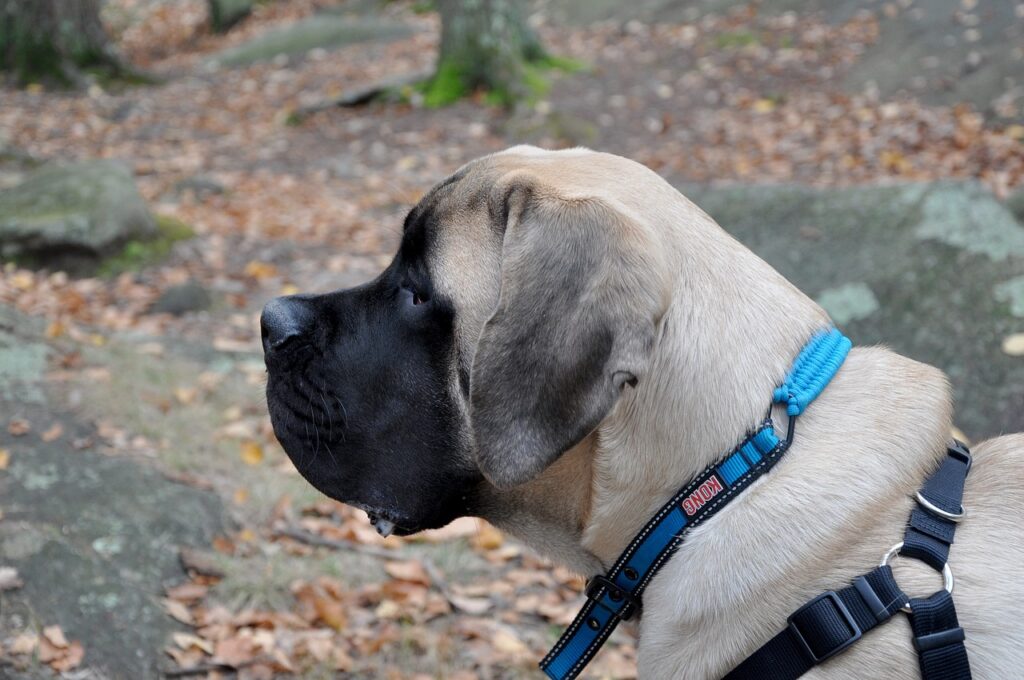
The English Mastiff is the largest Mastiff breed, known for its massive size and gentle nature. Their origins can be traced back to ancient Britain, where they were used as war dogs and guardians. Their sheer size and strength made them formidable opponents in battle and loyal protectors of their homes and families. Today, English Mastiffs are known for their calm and gentle demeanor, often described as gentle giants.
They are deeply affectionate with their families and enjoy being involved in family activities.
Breed Characteristics
- Origin: England
- Height: 30-36 inches (male), 27-34 inches (female)
- Weight: 160-230 pounds (male), 120-170 pounds (female)
- Temperament: Gentle, loyal, calm
- Life Span: 6-10 years
- Care Requirements: Moderate exercise, regular grooming, and attention to potential health issues like bloat, cardiomyopathy, and joint problems
5. Neapolitan Mastiff
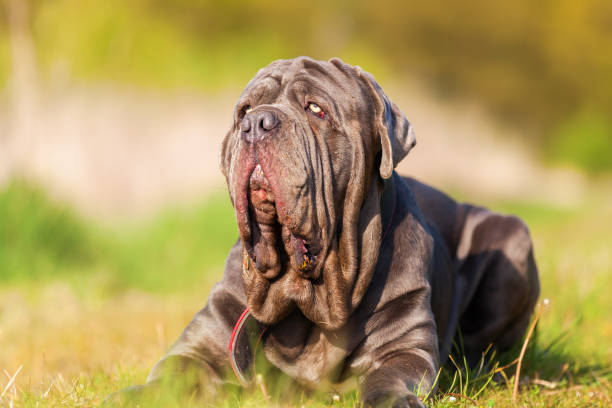
The Neapolitan Mastiff is an Italian breed with loose skin and a powerful build. Their origins can be traced back to ancient Rome, where they were used as war dogs and gladiators in arenas. Their loose skin and thick coat provided protection during battles. Today, Neapolitan Mastiffs are known for their guarding instincts and wary nature towards strangers. They are deeply loyal to their families and can be affectionate, but they require experienced owners who can handle their dominant personality and provide consistent training.
Breed Characterisitics
- Origin: Italy
- Height: 26-31 inches (male), 24-29 inches (female)
- Weight: 130-155 pounds (male), 110-130 pounds (female)
- Temperament: Protective, dominant, wary of strangers, and needs experienced owners
- Life Span: 7-9 years
- Care Requirements: Moderate exercise, regular grooming to manage skin folds, and attention to potential health issues like cherry eye and bloat
6. Spanish Mastiff
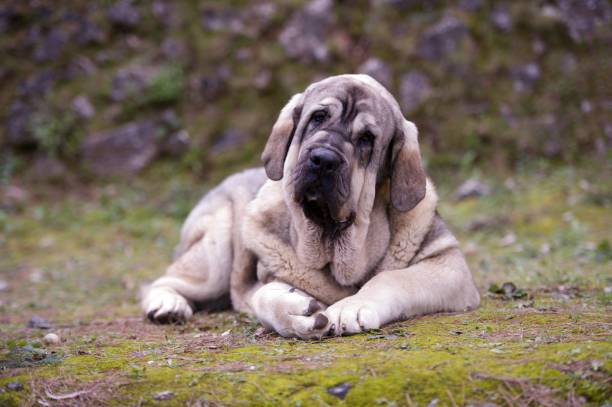
The Spanish Mastiff is a large and athletic breed used for guarding livestock. They have a long history in Spain, dating back to the Middle Ages, where they were used to protect livestock from wolves and other predators. Their size, strength, and protective instincts made them invaluable to shepherds and farmers. Today, Spanish Mastiffs are known for their independence, loyalty, and protective nature. They are often reserved with strangers but form close bonds with their families.
Breed Characteristics
- Origin: Spain
- Height: 30-34 inches (male), 28-32 inches (female)
- Weight: 170-200 pounds (male), 140-170 pounds (female)
- Temperament: Independent, protective, reserved, and strong-willed
- Life Span: 10-12 years
- Care Requirements: Moderate exercise, regular grooming, and attention to potential health issues like hip and elbow dysplasia
7. South African Mastiff (Boerboel)
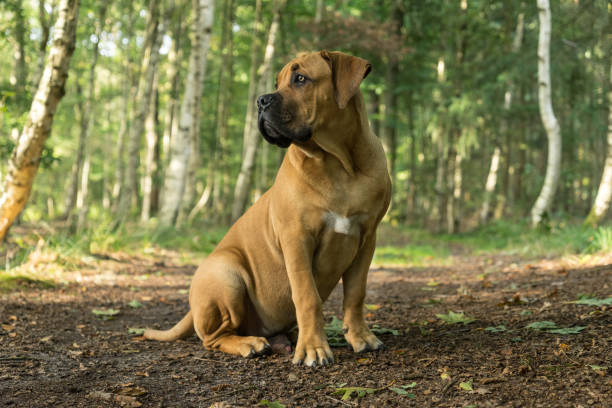
The South African Mastiff, also known as the Boerboel, is a powerful and protective breed from South Africa. They were developed in the 17th century by Dutch settlers to guard homesteads and protect against wild animals. Their strength, courage, and loyalty made them essential partners in the harsh South African landscape. Today, Boerboels are known for their confidence, protectiveness, and territorial instincts. They require experienced owners who can provide firm and consistent training to ensure they are well-mannered and obedient companions.
Breed Characteristics
- Origin: South Africa
- Height: 24-27 inches (male), 22-25 inches (female)
- Weight: 150-200 pounds (male), 110-150 pounds (female)
- Temperament: Confident, protective, territorial, and needs early socialization
- Life Span: 9-11 years
- Care Requirements: Moderate to high exercise, minimal grooming, and attention to potential health issues like hip and elbow dysplasia
8. Japanese Mastiff (Tosa Inu)
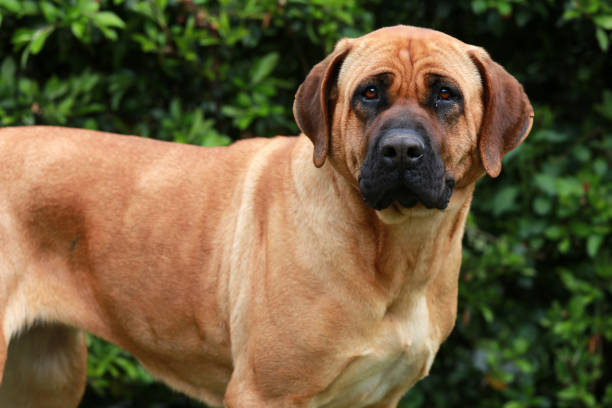
The Japanese Mastiff, or Tosa Inu, is a rare and powerful breed from Japan. They were developed in the 19th century by crossing native Japanese dogs with European breeds like the Bulldog and Mastiff. Originally bred for dogfighting, Tosa Inus are known for their courage, strength, and tenacity. Today, they are primarily companion animals, but their powerful build and dominant nature require experienced owners who can provide consistent training and socialization. Tosa Inus are known for their calm demeanor and loyalty to their families.
Breed Characteristics
- Origin: Japan
- Height: 24-32 inches (male), 22-28 inches (female)
- Weight: 130-200 pounds (male), 80-130 pounds (female)
- Temperament: Courageous, calm, dominant, and requires experienced handling
- Life Span: 10-12 years
- Care Requirements: Moderate exercise, minimal grooming, and attention to potential health issues like hip dysplasia and hypothyroidism
Mastiff Breeds By Size
Mastiff breeds come in various sizes, from the massive English Mastiff to the smaller Bullmastiff. The largest Mastiff breeds can weigh over 200 pounds, while the smaller ones are typically around 100-150 pounds.
| Breed | Max Height (inches) | Max Weight (pounds) |
| English Mastiff | 36 | 230 |
| Tibetan Mastiff | 33 | 180 |
| Spanish Mastiff | 34 | 200 |
| Neapolitan Mastiff | 31 | 190 |
| Dogue de Bordeaux (French Mastiff) | 27 | 145 |
| Bullmastiff | 27 | 130 |
| South African Mastiff (Boerboel) | 27 | 180 |
| Japanese Mastiff (Tosa Inu) | 32 | 200 |
How To Choose A Mastiff Breed For Your Home
Choosing the right Mastiff breed is an important decision. Here are some factors to consider:
- Lifestyle and Living Situation: Mastiffs are large dogs and require plenty of space to move around comfortably.
- Temperament and Personality: Some Mastiff breeds are more independent, while others are more active.
- Health Considerations: Larger Mastiff breeds may be prone to health issues.
- Cost of Ownership: Mastiffs have large appetites and require high-quality dog food.
The best way to choose a Mastiff breed is to do your research and talk to experienced breeders or owners. Consider your lifestyle, living situation, and personal preferences to find the perfect Mastiff companion for you.
By carefully considering these factors, you can choose a Mastiff breed that will be a loving and loyal companion for many years to come.
FAQs On Mastiff Breeds
1. Are Mastiffs good with other pets?
With proper socialization, Mastiffs can generally coexist peacefully with other pets, especially when introduced at a young age. However, it’s essential to supervise their interactions and ensure they have been adequately socialized to avoid potential conflicts.
2. Are Mastiffs good guard dogs?
Yes, Mastiffs are naturally protective and make excellent guard dogs. Their imposing size and bark are often enough to deter unwanted visitors. However, it’s crucial to train and socialize them properly to ensure they are well-behaved and don’t become overly protective or aggressive.
3. How much space do Mastiffs need?
Mastiffs are large dogs and require ample space to move around comfortably. A spacious home with a fenced yard is ideal. Regular access to a dog park or open space for exercise is also important.
4. What are some common health problems in Mastiff breeds?
Due to their large size, Mastiffs can be prone to certain health issues, including hip and elbow dysplasia, bloat, and certain types of cancer. Regular veterinary checkups and maintaining a healthy weight can help minimize the risk of these problems.
5. Are Mastiffs hypoallergenic?
No, Mastiffs are not hypoallergenic. They shed moderately and produce dander, which can trigger allergies in sensitive individuals.
6. Are Mastiff breeds good with children?
Many Mastiff breeds are known to be good with children, especially when properly trained and socialized. However, it’s important to supervise interactions between dogs and children to ensure everyone’s safety.
7. How much exercise do Mastiff breeds need?
Mastiff breeds vary in their exercise needs, but most require at least a moderate amount of daily exercise to stay healthy and happy. Regular walks, playtime, and mental stimulation are important for these dogs.
8. Are Mastiff breeds difficult to train?
Mastiff breeds can be strong-willed, but they are also intelligent and eager to please. Consistent and positive reinforcement training methods work best with these breeds. Early socialization is also important to ensure they are well-behaved around other dogs and people.

1 Comment
Your writing doesn’t just inform — it embraces, uplifts, and invites the reader to linger and reflect.